
Growing in the Open
On the things that happen away from the viewfinder

Photography is a solitary act. Just you, a frame, and whatever is happening in that sliver of world in front of you. I have always loved that about it. The quiet concentration of it.
But there is more to this practice than the moment of pressing the shutter. There is the long, slow work of becoming — and that, I have learned over more than two decades, cannot happen alone. It needs friction. Other eyes. Honest voices. Time spent looking at work you did not make.
Here are four things that have helped me grow. None of them require a new camera.
Putting Your Prints on the Table
I recently read a piece in The Week by Nitin Rai, written as a tribute to his father, the great Raghu Rai. One passage stopped me.
He describes being four or five years old, watching his father come home in the evenings with a set of prints. He would spread them on the table. Friends would gather — painters, photographers, editors — and they would talk. Jatin Das. Himmat Shah. Kishore Parekh. What worked and what did not. No flattery. Just looking.
That room was a kind of school.
What struck me reading it was how rare that practice has become. Most photographers today shoot, process, and share — straight to a screen, straight to a feed. Likes arrive in minutes. They feel like response. They are not. They are a signal that the image was noticed. That is different from the image being seen.
The early Magnum photographers understood this too. Cartier-Bresson, Capa, Doisneau — they talked constantly. Shared images. Pushed back on each other. Magnum itself grew out of those conversations: a formal structure built around the belief that photographers needed each other, not just assignments.
What Raghu Rai was doing in that room — and what HCB’s circle did in Paris — was something few of us make time for today. Honest, sustained looking with people whose judgment we respect.
I have tried to keep this practice alive. In Mumbai, I organize small gatherings — at my house, or a friend’s — where photographers bring work to share. I push for prints. There is something about holding a photograph, laying it beside another, moving them around on a table, that digital screens cannot replicate. You see differently. The work either holds or it doesn’t. You can tell quickly when you are looking at the real thing.
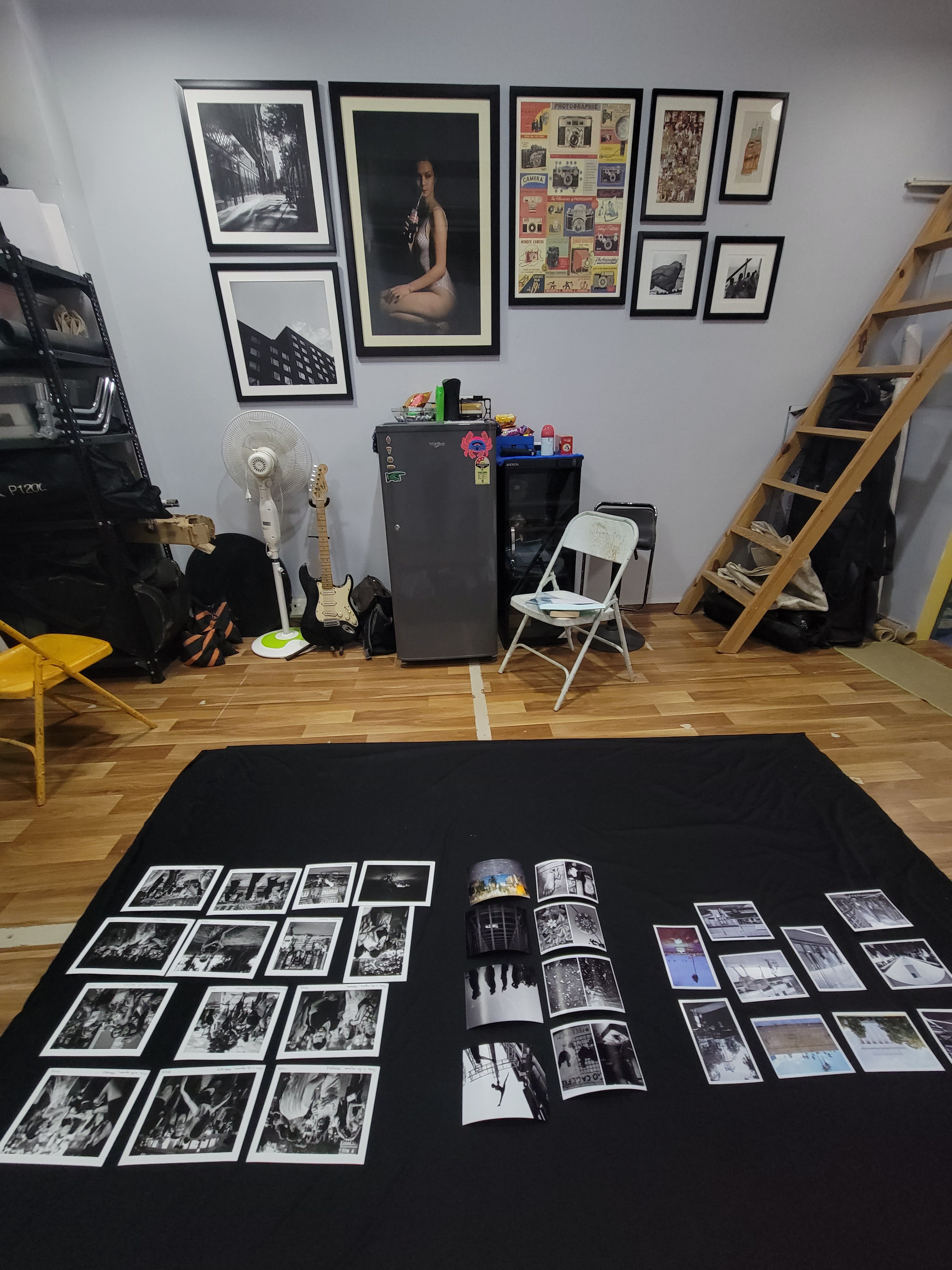
During my years in Boston, I was part of a group run by photographer Donna Dufault . It was more structured. At the start of each year, we each wrote our photography goals — and how we planned to reach them month by month. When we met, we checked in. We helped each other through creative ruts, technical blocks, questions about how to present and publish work. The group had portrait photographers, wedding photographers, documentary and street photographers. Different visions, one conversation.
That group helped me grow into my first large-scale exhibition — work shown in a gallery for two months. I don’t think that would have happened without those meetings.
Find your table. Put your prints on it. Invite people whose eyes you trust.
The Print as Teacher
I have written before about my relationship with prints, but it bears saying again here in a different way.
When you hold a print, something changes. The tactile quality of paper — its weight, its surface — slows you down. You cannot scroll past it. You have to sit with it.
And when you spread prints across a floor or a wall, you begin to see things that remain invisible on a screen. Patterns emerge. Connections you hadn’t noticed. A photograph you thought was weak turns out to belong somewhere specific in a sequence. Another that looked strong in isolation loses itself in a group. The print teaches you how your work breathes together.
It also has a way of showing you when you’ve done too much. Screens invite overworking — another adjustment, another crop, another pass through the shadows. But a print held in your hands at arm’s length has its own authority.
The print teaches you when to stop.
Ansel Adams considered the print the culmination of the entire photographic process. He wrote an entire book about it — simply titled The Print — devoted to the idea that the image you make in the field is not yet the photograph. It becomes the photograph in the making of the print. He spent half a day sometimes on a single exposure decision in the darkroom. The print was where his seeing was completed.
The Magnum photographers had a different but equally instructive practice. In the early days of the agency, photographers applying for membership were judged not by their finished work prints but by their contact sheets — because those small, unedited rows of frames revealed how a photographer thought. Cartier-Bresson famously reviewed these sheets by rotating them in every direction, upside down, sideways, completely divorced from subject matter — looking only at the formal relationships within the frame.
That is print as an act of honest seeing. It is available to all of us, at any size. 4x6 inches is enough. The point is to make the work physical, to hold it, to let it tell you what it is.
The Voice You Need to Find
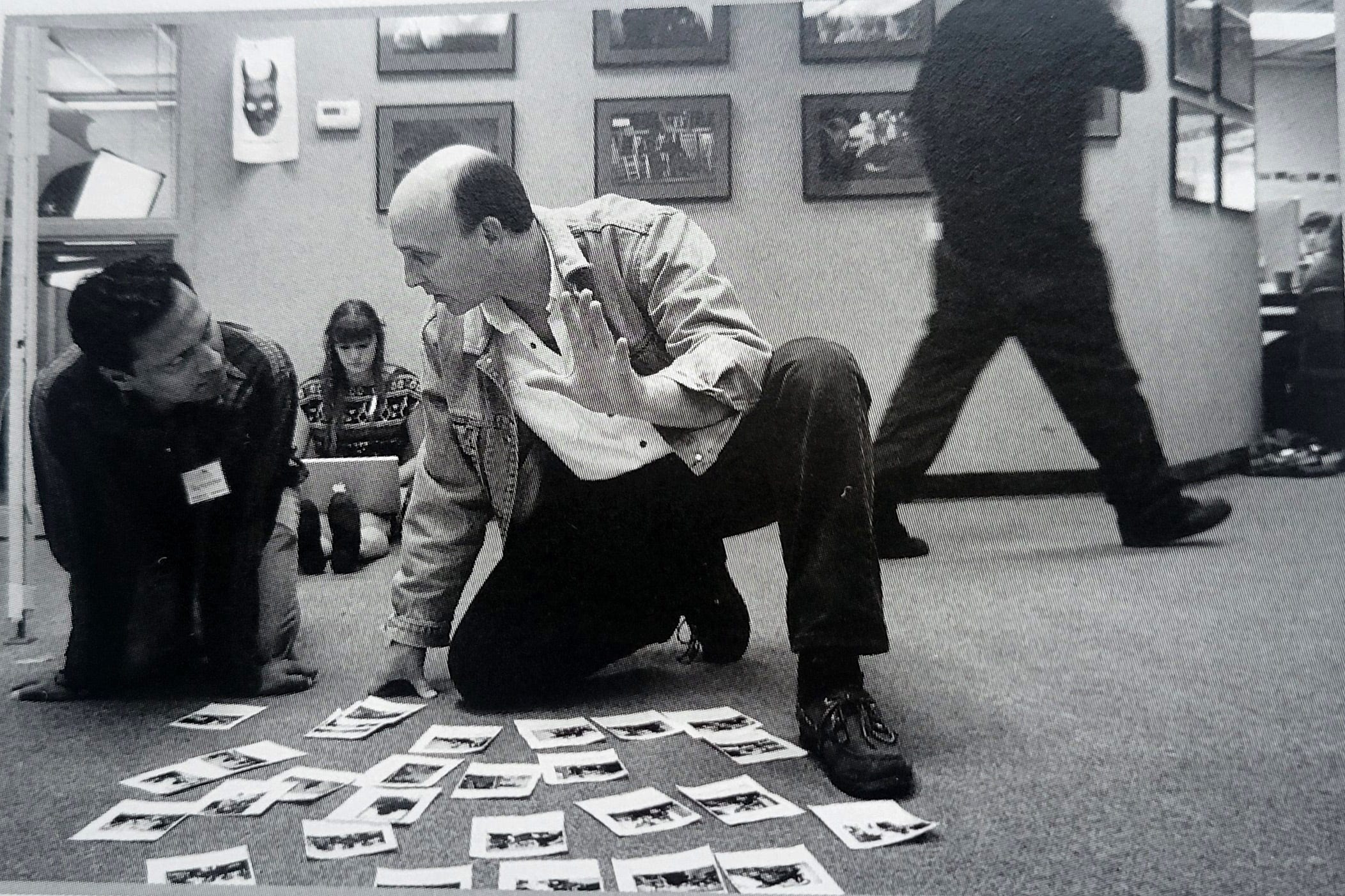
Like any art form, photography is largely a solitary and interior practice. I value that. You in the world, with your camera, making sense of what you see.
But there comes a point where the interior conversation needs an interlocutor.
A mentor is someone who knows your work deeply enough to tell you what you cannot tell yourself. Not a teacher in the formal sense — though formal study has its place. A mentor is someone who holds your vision and your ambition at the same time. Who knows the gap between them and cares enough to say so.
Early in my journey, I took classes at a community college in Texas. Later, I sought out photographers I admired through workshops. Those workshops gave me more than I expected, and not just from the photographers who ran them.
Share your work. Share your uncertainty. That sharing is not a weakness. It is what makes the work stronger.
The workshop assignment is a strange and useful thing. Ten photographers are given the same brief — the same street, the same instruction, the same hour. And ten completely different photographs come back. That alone is worth the price of admission. You see how another person, standing in the same world, finds an entirely different frame. You realize that what you thought was the only possible interpretation was just yours. And that realization is clarifying, not destabilizing. It tells you something about your instincts — what you are drawn to, what you automatically exclude, where your eye naturally goes. The other participants teach you as much as the mentor does.
After more than twenty years in this field, there are still a small number of people I return to regularly — people who know my strengths, know where I tend to hide, and will not let me get away with the comfortable version of a project.
Cartier-Bresson had André Lhote, the Cubist painter who taught him composition and gave him the phrase that became his creed: “No one enters here but geometricians.” He had Robert Capa, who told him bluntly to stop calling himself a Surrealist and embrace photojournalism. Capa was mentor and conscience both. When Capa died in 1954, HCB was devastated not just by the loss of a friend but by the loss of that voice.
You don’t need someone who makes the same kind of photographs you do. You need someone who sees your work clearly and respects what you are trying to do with it.
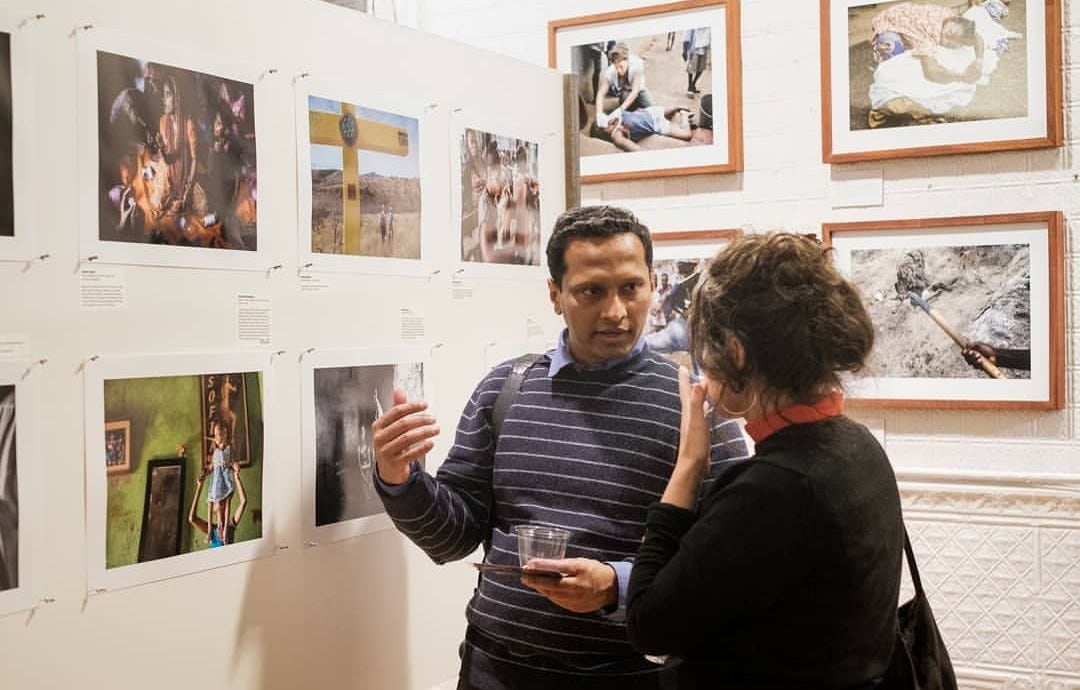
Portfolio reviews and workshops are good places to begin. Show your work to half a dozen people. You will know when something resonates — not because they say the right things, but because they ask the questions you have been avoiding.
Work You Did Not Make
Looking at other photographers’ work is its own form of education — but only if you look slowly enough.
A feed of images is not the same as a photobook.
The book has been sequenced. Designed. Every turn of a page is a decision. The artist has thought about why this photograph follows that one, what the silence between them means, how the work moves from beginning to end. Holding that in your hands teaches you to think about your own work in those terms.
In Mumbai, we are fortunate to have Jojo Library, with a collection of photobooks that rewards serious time. I encourage you to use it.
Exhibitions offer something else. When you attend an artist talk and hear a photographer describe their choices — not just what they photographed, but how the space was organized, why certain images were printed at certain sizes, what was left out — you begin to understand what a completed body of work actually requires. The photographs are only part of it.
In November 2025, I attended an exhibition by Pedro Costa at the Tokyo Photographic Art Museum called Inner Vision. The gallery was set up as a maze-like structure, entirely dark. You moved from one image or audio-visual presentation to the next as if entering different worlds. It was closer to theater than to a conventional gallery. The experience stayed with me.
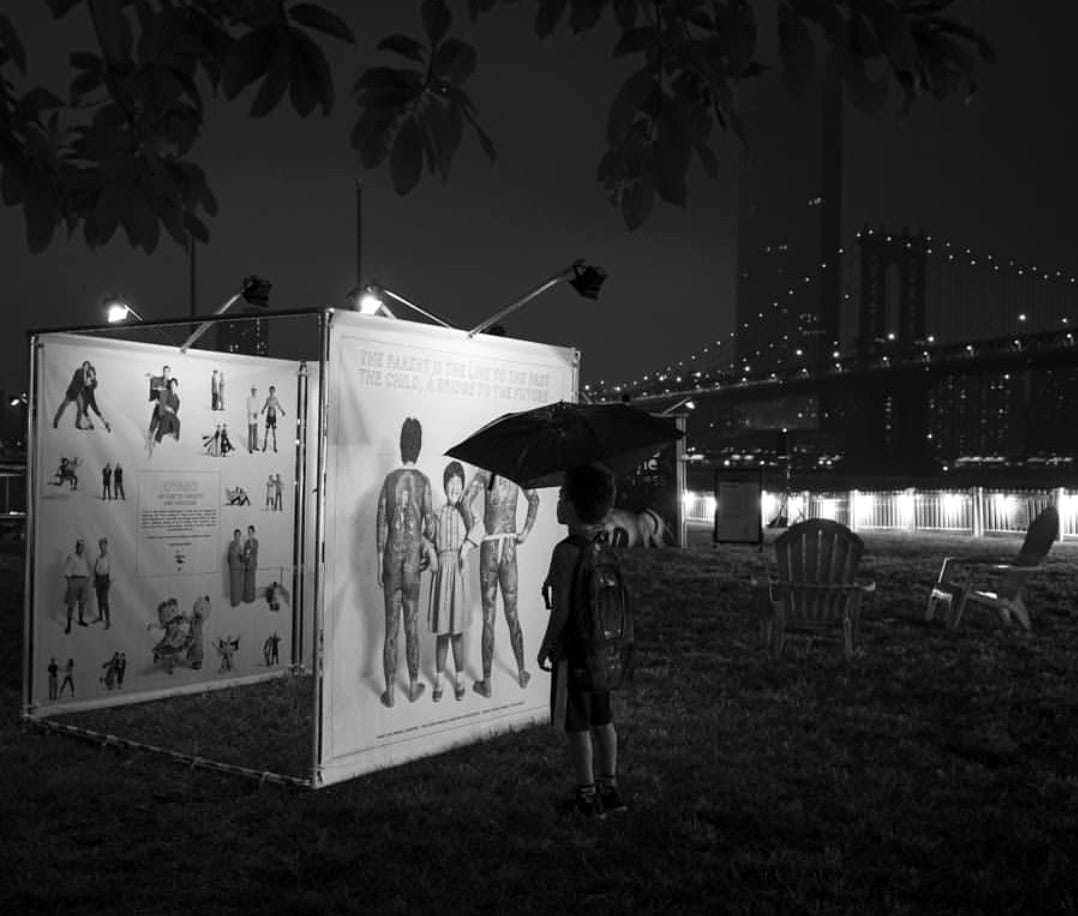
Last week, I attended an artist walk with Abhishek Khedekar at the Dilip Piramal Gallery at NCPA, for his exhibition Tamasha. One piece in the show was a large canvas — six feet by four — hung from a single nail at the top, so it folded over itself and drooped. During the walk, Abhishek explained that the photograph showed the drummer who greeted visitors at the entrance of the performance tent he had documented. The canvas, left to hang this way, asked you to lift it — to unfold it yourself and enter, the way you would enter the tent. The audience became participants.
That kind of thinking about presentation cannot be learned from a screen. You have to be there.
Photographic growth does not happen in isolation. It happens in the space between your work and someone else’s eyes. Between the image on the screen and the print in your hands. Between what you already know and what the right book, the right room, the right conversation, will show you.
The camera is only the beginning.
What has helped you grow as a photographer? I’d love to hear — reply to this note or leave a comment below.
An interesting article and one that a lot of photographers need to read. as a committed darkroom printer I obviously feel very strongly about seeing and holding original prints.
Very good post, Uday. People is giving each time less time to observe carefully, to think, to enjoy or dislike. The act of just saying that you dislike got the status of a very offensive thing while a critical meaning or opinion can be constructive if done with respect and argumentation. I wonder sometimes if it wouldn’t be good to have an heart not only for likes but also for dislikes. One where people would need to explain why they chose one or the other. I miss more mentorship as well. I’ve a friend on Substack with whom I discuss my stuff and he his and this feels so good. It lets you reflect on what you’ve done. Without knowing, you get better. Why can’t we be more mentors for each other instead of only likers? How beautiful would it be if we start a Substack kind of photo club where people would be allowed to send each month the best photo that according to them they have made on that particular month and put them for appreciation of the others? Rules for entries: be fair, critical, honest, constructive and definitely respectful.
Not allowed: big ego’s. Because when the ego is big it is the work that suffers.